|
|

|
|
|
[Sign Up Now] to Receive Our FREE Daily SCVTV-SCVNews Digest by E-Mail |
|
|
Inside Weather
Calendar 
Today in S.C.V. History January 16
1926 - Newhall Community Hospital, est. 1922, opens in larger, more modern hospital building at 6th & Spruce streets [story]

|
Comment On This Story |
Opinion Section Policy
Read More From... RECENT COMMENTARY
Friday, Jan 16, 2026
Tuesday, Jan 13, 2026
Saturday, Jan 10, 2026
Friday, Jan 2, 2026
Friday, Jan 2, 2026
Monday, Dec 29, 2025
|


 Tweet This
 Facebook
 Digg This
 Bookmark
 Stumble
 RSS
RSS





Latest Additions to SCVNews.com
|
A strong defensive performance by The Master's University Lady Mustangs basketball team led to a 73-45 win against OUAZ in Surprise, Ariz.
 |
The Tejon Ranch Conservancy has published its calendar of nature programs it will host in February.
 |
The regular meeting of the Saugus Union School District Governing Board of Trustees will be held Tuesday, Jan. 20 beginning at 6:30 p.m. The board will first meet in closed session at 5:30 p.m.
 |
The William S. Hart Union School District has announced that Dr. Collyn Nielsen, Deputy Superintendent, Human Resources, has been named the 2026 Negotiator of the Year by the Association of California School Administrators.
 |
The city of Santa Clarita Planning Commission has scheduled two site tours of the Princessa Crossroads Specific Plan Project and a virtual tour of the Belcaro at Sand Canyon Project. These projects are expected to hold public hearings in the near future.
 |
Free business training webinars are available from the College of the Canyons Small Business Development Center this January.
 |
|
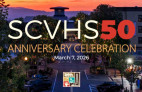
The Santa Clarita Valley Historical Society will celebrate its 50th anniversary with a unique gala on Saturday, March 7, 6-10 p.m.
 |
Saugus High School Instrumental Music gives back while raising much-needed funds for the high school's music program.
 |
Join the Santa Clarita Valley Chamber of Commerce for a special Non-Profit Council Roundtable, "Non-Profit Love Match: A High-Impact Networking Experience for Professionals & Nonprofits," 5-6:30 p.m. Tuesday, Feb. 10 at the Education Center at Child & Family Center.
 |
There are places in our community where history is not simply remembered, but carefully safeguarded and brought to life every day. William S. Hart Park is one of those rare treasures.
 |
Congregation Beth Shalom offers a monthly film series that shows selected independent films one Sunday per month at 2 p.m.
 |
The California Department of Public Health is collaborating with the California Department of Alcoholic Beverage Control and the California Department of Tax and Fee Administration to remind consumers and retailers that products containing kratom or 7-hyrdroxymitragynine, commonly known as 7-OH, are associated with addiction, serious harm, overdose and death.
 |
|
Foothill League soccer is coming into a final flurry of league matches that will sort out standings.
 |
The Valencia FivePoint Farmers Market will offer a special live cooking demonstration and tasting on Sunday, Jan. 18.
 |
In honor of Martin Luther King Jr. Day, Governor Gavin Newsom announced that California residents and visitors will receive free vehicle day-use entry to participating California state parks on Monday, Jan. 19.
 |
1926 - Newhall Community Hospital, est. 1922, opens in larger, more modern hospital building at 6th & Spruce streets [story]
|
Assemblywoman Pilar Schiavo will host the Third Annual MLK Day of Service on Monday, Jan. 19. The event will be held 11:30 a.m.-1 p.m. at the Santa Clarita Vallet Boys and Girls Club Thomas E. Dierckman Clubhouse.
 |
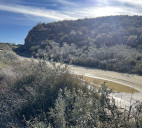
The Ridge Route Preservation Organization will host a Ridge Route Storm Clean Up Day Sunday, Jan. 18 at 7 a.m.
 |
|
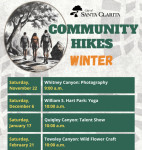
The city of Santa Clarita January Community Hike will be held Saturday, Jan. 17, at 10 a.m. in the Quigley Canyon Open Space, Cleardale Avenue, Santa Clarita, CA 91321.
 |
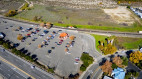
The city of Santa Clarita invites the community to celebrate the groundbreaking of Via Princessa Park on Thursday, Jan. 22, at 10 a.m.
 |
Canyon Country Jo Anne Darcy Library will host a "Teen Library Eats: Ramen Noodle," event Thursday, Jan. 29, 4-5 p.m. at 18601 Soledad Canyon Road, Santa Clarita, CA 91351.
 |
The city of Santa Clarita has issued a traffic alert for Smyth Drive in Valencia.
 |
Sam Shepard’s dark comedy "Curse of the Starving Class," presented by Eclipse Theatre LA, will run weekends beginning Friday, Jan. 23-Feb. 1 at The MAIN.
 |
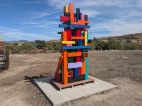
Bring your art to the trails. The city of Santa Clarita’s 2026 Temporary Trailhead Project is calling artists to create original sculptures that respond to our stunning landscape, open spaces and the everyday flow of explorers. The application deadline is Jan. 26.
 |


REAL NAMES ONLY: All posters must use their real individual or business name. This applies equally to Twitter account holders who use a nickname.
11 Comments
So in other words, thanks to the government built CA Aqueduct, State Water Project & LA Aqueduct we have water in So Cal that otherwise we never would have had. W/o these gov’t built projects – funded by taxes & fees – So Cal as we know it today could never have existed. Good pts.
Fantastic article. Thank you.
Korenthal reveals his POV with the phrase “runaway environmentalism”. He recognizes that the water he wants to import originates in the Sierra snowpack (though the Sacramento River originates in the Trinity/Cascadian range, a geologic reality that most Californians ignore)which is at historic low level, but then blames bureaucracy for the lack of water. There are numerous factors that limit the amount of water that can be pumped out of the Delta. Knowing this, the state created the Sacramento-San Joaquin Delta Reform Act of 2009; it is the policy of the state to reduce
reliance on the Delta in meeting California’s future water supply needs through a statewide strategy of investing in improved regional supplies, conservation, and water use
efficiency. The “dam it-Baby-dam it” (to paraphrase Sarah Palin) ideology is so 19-20th century.
Mentioning delta smelt while ignoring the rapidly extirpated Central Valley Salmon that need a balanced Delta reveals either ignorance or dishonesty.
Please note that Kevin reveals that the CVP supply and the SWP agric. supply were provided to recharge groundwater (one does not recharge surface water sources) that had been over pumped. The over pumping continued after these projects were built because California has no groundwater regulation. Without limiting the amount of groundwater pumped to the amount available we can NEVER solve our water problems. California should NOT build another dam until our groundwater laws join the rest of the United States. This is not a problem caused by environmentalists.
Those of us who live and farm in the Sacramento-San Joaquin Delta do not believe it is “runaway environmentalism” to want to preserve Delta water quality. The Central Valley Project and State Water Project have contracted to deliver 7.467 Million Acre Feet (MAF) per year from an estuary that can reasonably provide 3.5 to 4 MAF. The Peripheral Canal and the BDCP tunnels both hold the same threat to the Delta: salt intrusion from SF Bay. Delta interests are not opposed to exports – but believe they should be limited to what is reasonable. The BDCP tunnel project is a DUAL conveyance plan – pumping from both the North and South Delta. There is no possibility that the project can be operated for the benefit of the Delta. It’s not about fish vs people – this is Delta water quality vs exports.
Further – to “mitigate” for this project, the BDCP will condemn over 20% of Delta lands – much of it above sea level and sustainably farmed for over 150 years, to be converted to “habitat”. BDCP proponents, calling this confiscation (by eminent domain) a “public benefit” will look to California taxpayers to foot the $7 Billion habitat plan bill through water bonds. Taxpayers putting other taxpayers out of business!
There are several alternative plans for moving water through the Delta, none of which get a fair evaluation by the BDCP planners. And all of which are less expensive. Taxpayers and ratepayers need to wake up. Thanks for the opportunity to comment. Rogene Reynolds, South Delta.
Let’s hope we all conserve our supply of water as a community, and hope that we can all get through the drought. Scientists have been foreseeing this for a long time, but no one has been listening up until now.
Yosemite has geysers??? [“… wars over access to and ownership of ground water began erupting like the geysers in Yosemite.”]
A key point in California’s water puzzle not mentioned in this opinion piece is how the availability of water has never really played any role in the planning development of California. Without water being piped into Southern California from the Colorado River, Owens Valley and San Joaquin Valley, the area that we live in would look a lot different and would come nowhere near the ability it has to support the growth the region has experienced since the turn of the 20th century. If you’re interested in gaining more knowledge on this subject, I suggest the you pick up a copy of a book written by Marc Reisner titled “Cadillac Desert”. http://www.amazon.com/Cadillac-Desert-American-Disappearing-Revised/dp/0140178244
Ever hear of Owens Valley or Mono Lake or Tulare Lake. The Central Valley needed their water too!
FR
Thank you everyone for your very informed comments on my opinion piece. This is a mix of opinion and research and relies on historical research done by others. If I got a few points wrong, I want to have the opportunity to correct my knowledge. If you would like to discuss a particular element about this piece, please email me at kkorenthal@gmail.com. Thanks again! KK