The California Air Resources Board has announced that data from a specialized satellite has helped resolve 10 large methane leaks at oil and gas facilities across California since May. The leaks are detected by cutting-edge sensors on the Tanager-1 satellite and tracked on a new CARB dashboard.
The methane-reducing action is equivalent to removing about 18,000 cars from California roads for a year.
“California’s Satellite Methane Project is a powerful example of research delivering real results for Californians and marks the start of a new era in how we track and cut methane emissions,” said CARB Chair Lauren Sanchez. “CARB staff designed, built and has now deployed the project, which proves that states can and will step up to close the dangerous gaps in climate data and action being created by the U.S. EPA and others in the current federal administration.”
Why it matters
Methane is the second largest source of human-caused greenhouse gas emissions with a warming impact up to 80 times greater than carbon dioxide and reducing it is critical to reaching our climate goals. It remains in the atmosphere for only about a decade, which has two important implications: most damage occurs relatively quickly, and reducing those emissions will more quickly slow rising global temperatures.
The project supports California’s regulations to limit methane leaks. That includes CARB’s Oil & Gas Methane Regulation, which requires operators of oil and gas field equipment to inspect their systems every quarter and to repair above ground leaks, and CARB’s Landfill Methane Regulation, which requires large landfills monitor and capture their methane emissions. The satellite enhances implementation and enforcement of these rules by allowing the state to detect and notify operators of leaks in close to real time.
How it works
The project uses specialized sensors mounted on the satellite to find and track large plumes from methane leaks at facilities in the state. CARB has used aircraft with similar sensors for leak spotting in the past, but the logistics and cost of monitoring that way make it less effective.
The satellite provides a much wider view and passes over California four to five times a week and can recheck the status of leaks as needed. This repetition makes it possible to follow progress in fixing large methane leaks. It also helps to determine the amount of gas involved and the duration of a leak.
Once the data is received, addressing a leak can happen quickly. For example, in early July, a leak detected by the state’s Methane Satellite Project that resulted from a piece of failing equipment in an oil and gas field in Kern County was repaired within 24 hours of operator notification.
California’s Satellite Methane Project is led by CARB with data provided through a contract.
Planet Labs built and operates the satellite,
Carbon Mapper detects and quantifies the methane data,
And CARB acts on that data, notifies facility operators and confirms repairs.
As part of the project, CARB has launched a dashboard tracking notifications and repairs.
The methane detection technology was developed at NASA’s Jet Propulsion Laboratory in Pasadena. CalSMP is the first major initiative to use the technology in a non-research setting. Three more satellites are expected to launch in 2026 and 2027.
States step up as federal government stumbles back
CalSMP begins operation and achieves results as the federal administration is actively attempting to blind climate science and hide data. The administration has quietly instructed NASA to begin deactivating two taxpayer funded Orbiting Carbon Observatories (OCO) and threatened to destroy them. OCO-2 is a satellite for monitoring global levels of carbon dioxide while OCO-3 is a standalone unit attached to the International Space Station. At the same time, U.S. EPA is proposing to end the decade old Greenhouse Gas Reporting Program.
CalSMP is intended to help California achieve its climate goals and increase data transparency. It is one of a suite of state initiatives which provide clear models demonstrating that Americans do not have to silently fall victim to the shocking and shortsighted federal effort to ignore the threat from our warming climate. With this work, California will continue to develop and rely upon scientifically backed facts to provide information to the public and inform its efforts to respond to climate change.
For more information visit https://ww2.arb.ca.gov/.
Like this:
Like Loading...
Related


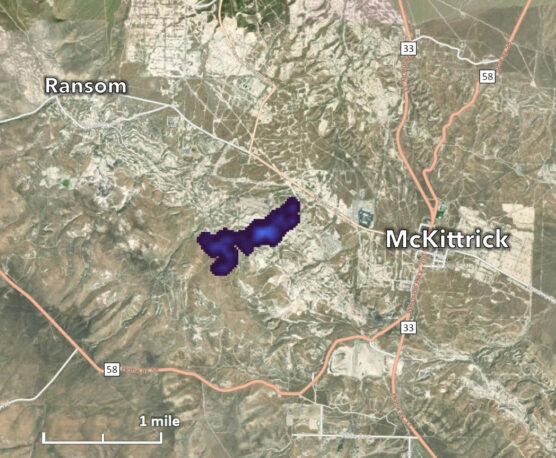 A gas field leak in Kern County that was identified by the state’s methane satellite and repaired within 24 hours in July 2025.

 Tweet This
 Facebook
 Digg This
 Bookmark
 Stumble
 RSS
RSS





REAL NAMES ONLY: All posters must use their real individual or business name. This applies equally to Twitter account holders who use a nickname.
0 Comments
You can be the first one to leave a comment.